Ergonomics for Barbers: How to Avoid Back and Neck Pain
Practical ergonomics guide for barbers: correct posture, work height, breaks and stretches. How to prevent back and neck pain and take care of your body in the barbershop.
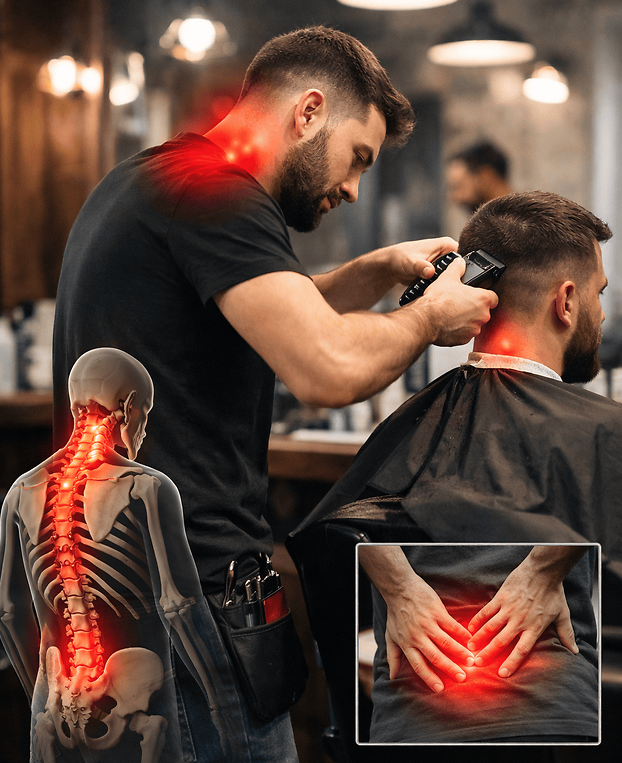
Ergonomics for barbers is essential to avoid back and neck pain and to keep working for many years without injury. Spending hours on your feet in fixed positions and repeating the same movements can take a toll if you don’t pay attention to posture, work height, and breaks. In this guide we explain how to prevent back and neck pain, adjust your workspace, and adopt habits that protect your body.
Many barbers start to feel discomfort in the lower back, shoulders, or neck after a few years. With small changes to how you work and to your equipment, you can greatly reduce the risk. Here you’ll find practical tips you can apply right away.
If you want to organize your appointments and have more control over your schedule while taking care of your back, try Barbería Club with no commitment: Try free
Why Do Barbers Get Back and Neck Pain?
Barbershop work combines several factors that strain the back and neck:
- Standing for long hours: constant load on the spine and legs.
- Static postures: leaning over the client or twisting your neck to see the cut keeps muscles under tension.
- Repetitive movements: scissors, clippers, and razor force shoulder and arm positions that repeat dozens of times a day.
- Lack of breaks: when there’s a queue, it’s easy to skip rest and stretching.
Without good ergonomics, these conditions can lead to muscle tension, neck pain, lower back pain, or even herniated discs over time. Fortunately, most discomfort can be prevented with adjustments to your workstation and daily habits.
Correct Posture When Cutting and Shaving
The foundation of ergonomics for barbers is keeping a posture that doesn’t overload the spine or neck.
Back and Shoulders
- Keep your back as straight as possible; avoid leaning too far toward the client.
- Avoid hunching your shoulders: relax them and pull them slightly back.
- If you need to get closer, move the client’s chair or move your whole body instead of bending only at the waist.
Work Height
The client’s chair should be at a height that lets you work with your arms at a comfortable angle (about 90° at the elbow) without bending over. If the chair is too low, you’ll lean forward; if it’s too high, you’ll raise your shoulders and load your neck and traps. A barber chair with adjustable height is an investment that pays off for your back.
Feet and Support
Distribute your weight between both feet and avoid always standing on the same leg. If you can, use a small footrest or anti-fatigue mat to reduce pressure on your legs and lower back.
Adjusting Your Space and Tools
Station layout has a big impact on ergonomics for barbers.
Work Table and Mirror
- Place scissors, clippers, and products at a height that doesn’t force you to bend or raise your arms too much.
- The mirror should be at eye level or slightly below so you don’t strain your neck looking up or down for long periods.
- Keep frequently used tools close to your body to avoid unnecessary twisting and reaching.
For more on which equipment suits you, see best machines for barbers, including weight and grip, which also affect load on shoulders and wrists.
Light, Comfortable Tools
Choose clippers and scissors that aren’t too heavy and that fit your hand well. An ergonomic grip reduces tension in fingers, wrist, and forearm, and in the long run in shoulder and neck too. The OSHA ergonomics page highlights the importance of adapting tools and tasks to reduce repetitive strain injuries.
Breaks and Stretches During the Day
Posture alone isn’t enough: your body needs breaks and movement.
Short Breaks
Every 45–60 minutes, take 2–3 minutes to walk, stretch your neck and shoulders, and rest your eyes. If you use a booking system like Barbería Club, you can see between appointments when you have a short gap for a break without keeping the client waiting.
Useful Stretches for Barbers
- Neck: gentle side bend (ear toward shoulder), don’t force. Hold 15–20 seconds each side.
- Shoulders: bring arms behind your back and clasp hands, or place one hand on a door frame and turn your torso to open the chest.
- Lower back: standing, place hands on lower back and arch gently backward; or seated, lean forward with hands on knees.
- Wrists: gentle rotations and flex/extend the wrist with arm straight.
Do these stretches at least once in the morning and once in the afternoon, and between clients if you can.
Floor and Footwear
Standing on a hard floor for hours increases fatigue in legs and back. An anti-fatigue mat in front of the client chair cushions the impact and reduces pressure. Wear comfortable shoes with good arch support and non-slip soles. Avoid completely flat or high-heeled shoes if you’re on your feet all day.
When to See a Doctor or Physiotherapist
If back or neck pain is persistent, you have tingling in arms or hands, or it limits your work, get it checked by a doctor or physiotherapist. Don’t wait until it becomes chronic: early treatment is usually simpler and lets you keep working with a better quality of life.
Frequently Asked Questions About Ergonomics for Barbers
What height should the client chair be for my back?
Ideally the client should be positioned so you can work with your elbows around 90° and your back straight, without leaning forward. It depends on your height and the chair; that’s why an adjustable chair is best. Try it and adjust until you don’t have to bend at the waist.
How many breaks should I take in an 8-hour shift?
A short break every 45–60 minutes is recommended: walk, stretch neck and shoulders, and rest your eyes. In 8 hours that’s about 6–8 breaks of 2–3 minutes. If you can’t do that every hour, aim for at least 2–3 longer breaks (5 minutes) spread through the day.
Can neck pain come from scissors or clippers?
Yes. If tools are heavy or the grip is awkward, you end up compensating with shoulders and neck. Choosing lighter tools with an ergonomic handle, and alternating hands when possible, can ease the load. Also check that you’re not constantly raising your shoulders because of the client’s or table height.
Summary: Ergonomics for Barbers in 5 Points
- Keep your back straight and avoid leaning; adjust the client chair height.
- Arrange table and tools at a comfortable height and close to your body.
- Take a break every 45–60 minutes and stretch neck, shoulders, and back.
- Wear comfortable shoes and, if possible, use an anti-fatigue mat.
- If pain persists, see a doctor or physiotherapist.
Ergonomics for barbers isn’t a luxury: it’s part of the job to avoid back and neck pain and to keep cutting and shaving for years. Small changes in posture, equipment, and breaks make a real difference. If you want to organize your appointments so you have gaps between clients to stretch properly, try Barbería Club for free and take care of your back while you take care of your clients.
Tags
Barbería Club Team
Barbería Club Team - Barbershop management experts with years of experience in the industry