Types of Fade Haircuts: Full Guide With Photos of Every Taper
Learn every type of fade haircut: low, mid, high, skin fade, taper fade, drop fade, temple fade, and burst fade. Photo guide, comparison table, and how to choose by face shape.
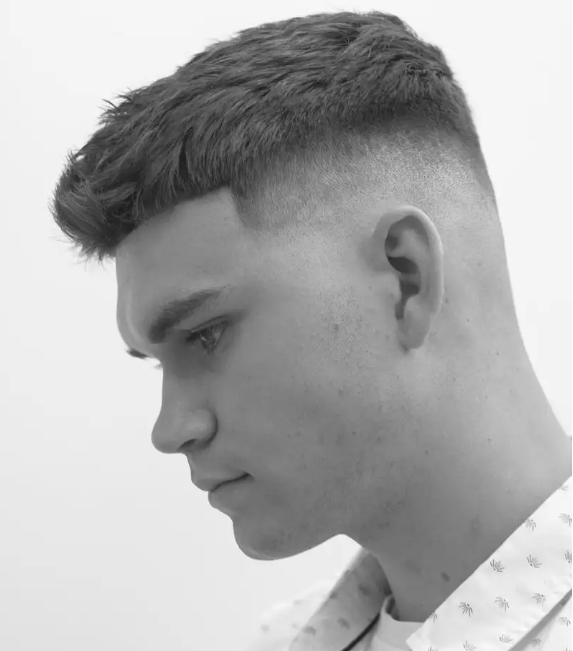
The fade haircut is the most requested look in barbershops worldwide — but “just a fade” is not enough. There are at least eight distinct types of fade haircuts, and picking the right one changes your whole silhouette. This guide to types of fade haircuts with photos walks through each variant, which face shapes they suit, and how to ask for them so you leave the chair with exactly what you pictured.
For more visual references, see our 10 men’s haircuts gallery and tips for barbershop pros. Scalp health and hair type also affect the result; the American Academy of Dermatology shares solid basics on everyday hair care.
What is a fade haircut?
A fade (also called a taper fade in everyday speech) is a cutting technique where hair gradually moves from longer on top to shorter — sometimes down to bare skin — on the sides and back. The name “fade” describes the soft, blended transition that defines the style.
Types of fade haircuts are not only about looks: each version changes how tall or wide your face appears, works with different lengths on top, and shows the barber’s technical skill. A clean fade is a hallmark of a professional cut.
The 8 main types of fade haircuts
1. Low fade
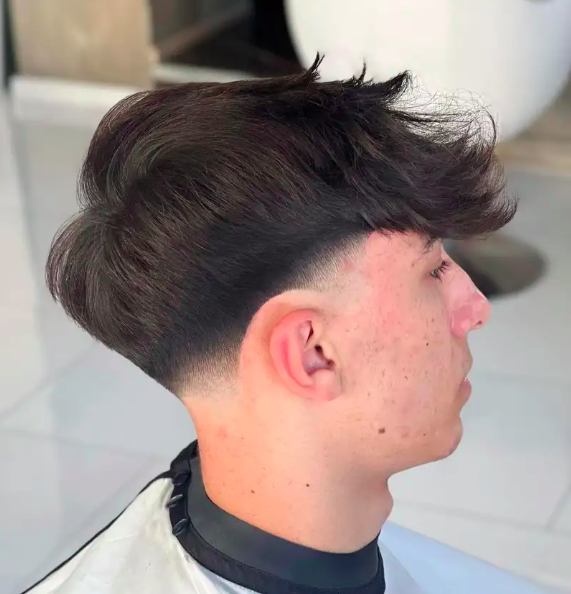
The low fade starts very low, just above the ears and sideburns. The blend begins near the natural neckline, so it is the most discreet and versatile fade. It works in formal settings and pairs with almost any style on top.
- Best face shapes: oval, oblong, square
- Vibe: professional, clean, athletic
- Upkeep: relatively low — growth looks soft
2. Mid fade
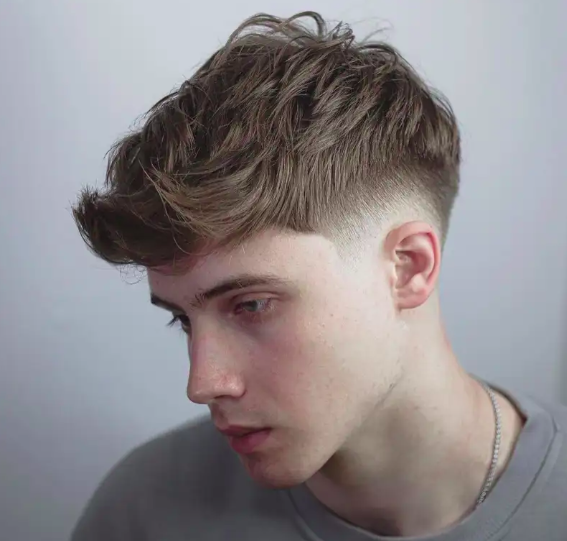
The mid fade starts around mid-head, roughly two fingers above the ear. It balances the subtle low fade and the bold high fade, which is why it is the most popular fade haircut in most shops.
- Best face shapes: oval, square, triangle
- Vibe: modern, street, everyday
- Upkeep: medium
3. High fade
The high fade starts high on the head, near the crown. It creates the strongest contrast and a very modern, urban look. Ideal for pomps, quiffs, and textured tops. Needs touch-ups more often.
- Best face shapes: oval, oblong; can elongate round faces
- Vibe: bold, fashion-forward
- Upkeep: high — every 2–3 weeks
4. Skin fade / bald fade
The skin fade (bald fade or zero fade) blends down to bare skin. It is the most dramatic fade haircut and demands precise clipper and foil work. The result looks crisp and athletic.
- Best face shapes: most shapes — healthy scalp helps
- Vibe: sharp, gym, editorial
- Upkeep: very high
5. Taper fade
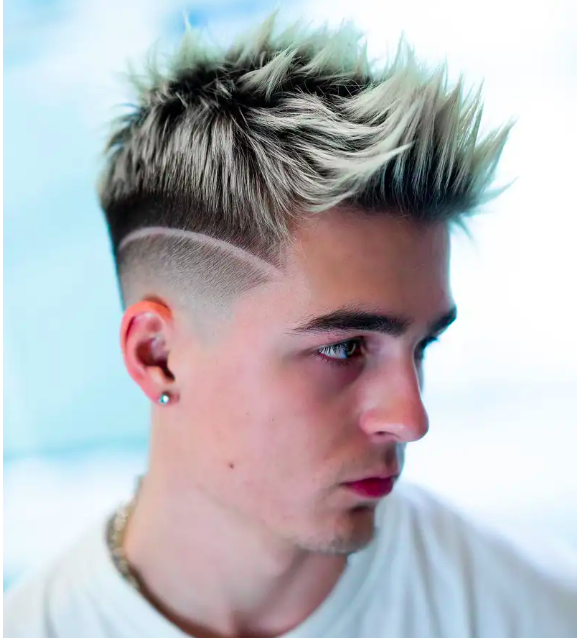
The taper fade keeps a longer, softer transition — often more scissor work than a harsh clipper line. It rarely goes to full skin and suits business-casual and classic styles.
- Best face shapes: mature clients, conservative workplaces
- Vibe: timeless, neat
- Upkeep: low
6. Drop fade
The drop fade follows the ear’s curve and “drops” toward the nape instead of staying straight. It looks custom and pairs well with hair designs or part lines.
- Best face shapes: strong jawlines
- Vibe: creative, street
- Upkeep: high — needs an experienced barber
7. Temple fade (temp fade)
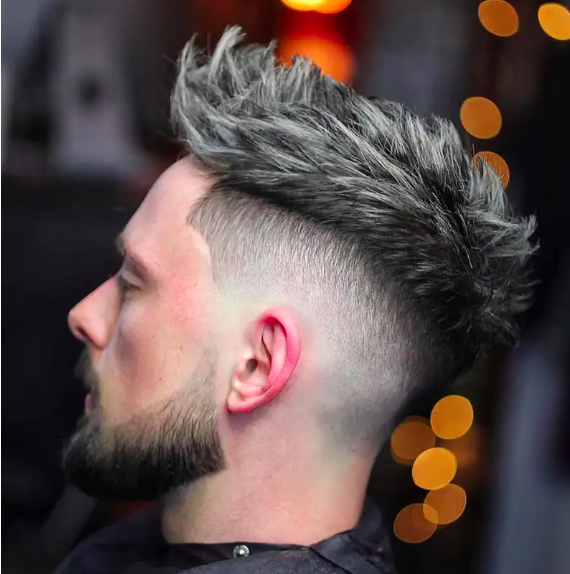
The temple fade concentrates the taper around the temples with less bulk removed elsewhere. It is a gentle intro to fade haircuts if you do not want a full side overhaul.
- Best face shapes: all — great “first fade”
- Vibe: versatile, modern
- Upkeep: medium
8. Burst fade
The burst fade radiates in a semicircle around the ear, like a fan. Often seen with mohawks, twists, or longer tops. Very eye-catching and technical.
- Best face shapes: expressive styles, athletic builds
- Vibe: creative, standout
- Upkeep: very high
Comparison table: 8 fade types
| Fade type | Height | Contrast | Maintenance | Setting |
|---|---|---|---|---|
| Low | Low | Low | ★ | Office / casual |
| Mid | Mid | Medium | ★★ | All-purpose |
| High | High | High | ★★★ | Urban |
| Skin | Varies | Very high | ★★★★ | Bold |
| Taper | Low, long blend | Low | ★ | Classic |
| Drop | Curved | High | ★★★ | Creative |
| Temple | Temples only | Medium | ★★ | Casual |
| Burst | Radial | Very high | ★★★★ | Statement |
How to choose a fade haircut for your face shape
- Oval: Any fade works — most flexible face shape.
- Round: Higher fades with volume on top add length; avoid very low fades that add width.
- Square: Low and mid fades keep proportions balanced; taper fades look great.
- Oblong / rectangular: Avoid very high fades; low fades and wider styles on top add balance.
- Triangle (wider jaw): Mid or temple fades balance the silhouette.
How to ask for a fade at the barbershop
- Name the fade type: “mid fade,” “low skin fade,” etc.
- State the lowest guard: “start at a 1” or “open to zero at the neckline.”
- Describe the top: length, texture, fringe, part.
- Show a photo: still the safest way to align expectations.
Example: “Mid fade from a 1 down to skin at the nape, textured french crop on top.”
Common fade mistakes to avoid
- Vague requests: “fade” alone is ambiguous — always say low, mid, or high.
- Wrong fade for your face: a very high fade on an already long face can exaggerate length.
- Skipping maintenance: skin and high fades grow out fast and look uneven.
- Ignoring hair type: very curly or coily hair may need different techniques for the same fade haircut.
FAQ: types of fade haircuts
What is the most popular fade haircut?
The mid fade is the most requested worldwide: strong look, still versatile, and easier to maintain than extreme skin fades.
How long does a fade last?
Low and taper fades can look good for 4–6 weeks. High and skin fades usually need a refresh every 2–3 weeks.
Is a fade the same as a taper?
All fades are tapers in the sense of gradual length change, but “fade” usually means a shorter, more dramatic blend — often to very short or skin.
Does hair type change the fade?
Technique adapts; a skilled barber adjusts tools for straight, wavy, curly, or coily hair.
Can I fade my own hair at home?
Possible in theory, but hard without angles and experience — mistakes show instantly. A pro barber is worth it.
Book your next cut through Barbería Club and find shops that deliver clean fade haircuts every time.
You now know the main types of fade haircuts — the right chair and barber make the difference.
Tags
Barbería Club Team
Barbería Club Team - Barbershop management experts with years of experience in the industry