What Is Barber Talc Used For? Complete Guide for Professionals
Find out what barber talc is used for, how to apply it correctly, which types exist and why no professional barber should work without it. The complete guide.
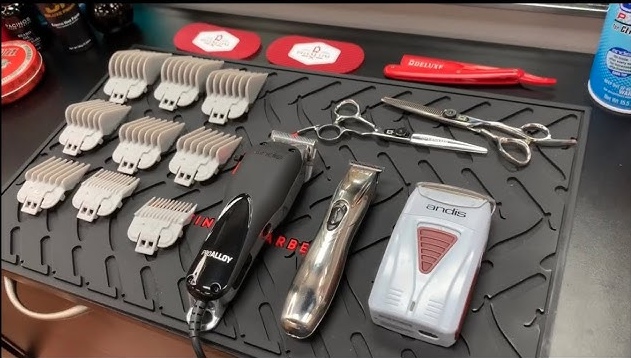
That white powder barbers dust on at the end of every haircut is far more than an aesthetic gesture. Barber talc performs precise technical functions that separate a truly professional finish from an amateur one. If you have ever wondered what barber talc is used for, this guide covers everything: uses, types, correct technique and the most common mistakes to avoid.
What Is Barber Talc Used For?
Barber talc serves several concrete purposes that make it an essential product at any professional chair:
1. Removing Loose Hair Clippings from the Skin
After a haircut or shave, tiny cut hairs stick to the skin of the neck, nape and temples. Talc creates a dry layer over the skin that prevents these hairs from adhering, allowing the neck brush to sweep them away in a single clean pass. Without talc, loose hairs stick to moist skin and bother the client for hours after leaving the chair.
2. Soothing and Calming Irritated Skin
Straight razor shaving and close clipper work create micro-friction on the skin. Barber talc has calming properties that reduce redness and the burning sensation, especially on sensitive skin. It acts as a mild anti-inflammatory agent that leaves the skin settled after the service.
3. Absorbing Moisture and Sweat
The nape and neck are zones that sweat. Talc absorbs skin moisture, which makes clipper and razor work in that area easier and prevents loose hairs from sticking to damp skin. Many barbers apply a small amount before working heavily sweated areas for exactly this reason.
4. Delivering a Professional Finish
Barber talc is not only functional — it is part of the ritual. That small cloud of white powder applied with a neck brush at the end of a cut, followed by a clean sweep, is the visual signature of a job well done. Clients associate it with professionalism and attention to detail.
5. Protecting Skin During Dry Shaving
Some barbers apply talc before dry shaving or as a complement to pre-shave products. It creates a barrier that reduces direct razor friction on the skin, especially useful for very sensitive or dry skin types.
6. Making Gloves Easier to Put On and Remove
Barber talc is also used to slip latex or nitrile gloves on and off more easily between clients. A little talc on the hands reduces friction and speeds up the process during a busy day.
How to Use Barber Talc Correctly
Knowing what barber talc is used for is only the first step. Proper technique makes all the difference:
Step by Step: Use at the End of a Haircut
- Wait until the haircut or shave is completely finished before applying talc
- Take a clean, dry neck brush and apply talc to it or directly to the skin of the nape and neck
- Distribute gently with circular or sweeping motions across the entire worked area
- Brush away the loose hairs using the brush from the neck outward, away from the client's clothing
- Remove the talc excess with one or two passes of a clean brush so no visible powder remains
Key Points
- Do not over-apply: too much talc is hard to remove and can stain dark clothing
- Always use a clean, dry brush: a damp or dirty brush turns talc into a paste
- Avoid contact with the client's eyes or mucous membranes
- Ask about talc allergies before the first application with a new client
Types of Barber Talc
Not all barber talcs are the same. Know the main varieties to choose the one that best fits your work:
Classic Powder Talc
The most common type. Fine white powder, neutral or with a mild fragrance. Works perfectly for daily use — finishing cuts and removing loose hairs. Affordable and long-lasting. Ideal for barbers who use it on every client.
Menthol Talc
Provides a cool, invigorating sensation on the skin. Highly valued in warm climates or for clients who prefer a refreshing experience. Menthol also has mild antiseptic properties that complement post-shave care.
Scented Talc
Available in fragrances like lavender, cedar, sandalwood or citrus. Adds a final olfactory touch to the service that clients remember. Use caution with sensitive-skin clients or those with fragrance allergies.
Hypoallergenic Talc
No fragrance, no colorants, formulated for very sensitive or reactive skin. Recommended as the default option if you do not know a new client's skin history.
Mineral-Free Talc (Talc-Free Powder)
Some modern products replace traditional mineral talc with cornstarch, arrowroot or other natural powders. They work similarly and are an option for barbers who prefer talc-free products for health or client preference reasons.
When to Apply Barber Talc
The question is not only what barber talc is used for but also when to use it:
- At the end of a haircut: to remove neck hair and deliver a clean finish
- After a straight razor shave: to calm the skin and clean residue
- Before lining the nape with clippers: on heavily sweating skin to improve traction
- After beard trimming: to clean short hairs from the neck and cheeks
- Before putting on gloves: to ease the process
Common Mistakes When Using Barber Talc
- Applying too much: creates visible excess and can stain the client's dark clothing
- Not cleaning the brush: a brush with previous product residue mixes everything and contaminates the talc
- Applying it on damp skin: talc turns into a paste and is difficult to remove
- Using it as a substitute for aftershave: talc complements but does not replace aftershave or post-shave balm
- Not asking about allergies: while uncommon, allergies to talc or its fragrances do exist
Barber Talc vs. Other Finishing Products
Talc occupies a specific place in the barbershop workflow alongside other products:
- Talc vs. Aftershave: aftershave hydrates and disinfects; talc dries and cleans hairs. Use them in order — aftershave first, then talc for the finish
- Talc vs. Hair lotion: they serve different areas — lotion goes on the hair, talc on the neck and nape skin
- Talc vs. Beard oil: oil moisturises the beard; talc cleans loose hairs from the skin. They are not substitutes
Which Barber Talc Do Professional Barbers Use?
Among the most recognised products on the market, Clubman Pinaud has one of the most iconic barber talcs in the world, with over 100 years of history. Osma, American Crew and various regional brands are also popular depending on the country.
The choice of talc depends on your client volume, the services you offer and your clientele's preferences. A barber seeing 15 clients a day needs an efficient, low-cost talc; one offering premium services can invest in artisanal-fragrance powders.
Barber Talc and Shop Management: The Detail That Builds Loyalty
Using talc might seem like a minor detail, but it forms part of the complete experience that makes a client come back. Just as talc is the finishing touch of every service, tools like Barbería Club are the finishing touch of barbershop management — automatic reminders, online bookings and appointment control so no client is left unattended.
Excellence in the craft is built by getting each small detail right: technique, products and business organisation.
Frequently Asked Questions about Barber Talc
Is barber talc mandatory?
It is not legally required, but it is a standard practice of the trade. Any professional barber should have it because it improves the finish, the client experience and the hygiene of the work.
Can barber talc cause allergies?
For people with very sensitive skin or a specific fragrance allergy, it can cause irritation. Hypoallergenic, fragrance-free talc is available for those cases. When in doubt, always ask a new client before the first application.
How often should the talc brush be cleaned?
Ideally after each client, or at least at the end of every working day. A dirty brush can transfer bacteria or product residue between clients.
Can baby powder be used in the barbershop?
It works, but it is not ideal. Baby powder has a different texture and formula from professional barber talc. For professional use, invest in a trade-specific product formulated for this purpose.
How long does a container of barber talc last?
It depends on workload. With daily use on 8–10 clients, a 300g container typically lasts two to four weeks. Talc is one of the most affordable and highest-yield supplies in the entire barbershop.
Conclusion
Barber talc is used to remove loose hair clippings, soothe the skin, absorb moisture and deliver the professional finish that sets quality work apart. It is affordable, goes a long way, and no serious barber should work without it. From application technique to choosing the right type for each client, you now have everything you need to make it a proper part of your workflow.
To take your barbershop to the next level — combining these small details with organised appointment and client management — try Barbería Club for free and discover how to simplify your daily operations.
A perfect cut ends with talc. A perfect barbershop ends with clients who keep coming back.
Tags
Barbería Club Team
Barbería Club Team - Barbershop management experts with years of experience in the industry